Apiaceae
Coriander
Coriandrum sativum
✓ Generally Safe
Safe in Pregnancy
Native to: Southern Europe, North Africa, Southwest Asia
Also known as: Cilantro, Chinese Parsley, Dhania, Kothmir
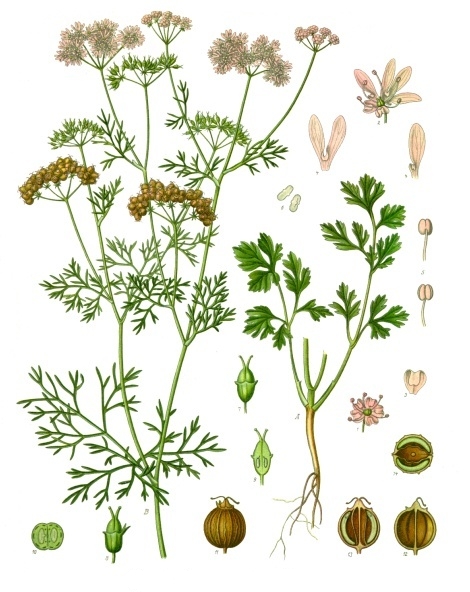
Wikimedia Commons / CC BY-SA
Parts Used
SeedLeaf
Therapeutic Uses
Digestive complaints (flatulence, IBS), anxiety (seed — animal studies promising), blood sugar regulation, urinary tract infections, heavy metal detoxification (controversial — leaf binds mercury, lead).
Herbal Actions
Carminative, antispasmodic, antimicrobial, anxiolytic, hypoglycemic (seed), diuretic, heavy metal chelator (leaf — traditional use)
Active Constituents
Volatile oil (linalool 60–80%, α-pinene, camphor, geraniol), flavonoids, phenolic acids, fatty acids (petroselinic acid)
Preparation Methods
☕ Herbal Tea🏺 Tincture⚗️ Essential Oil
Traditional Preparation Notes
| Herbal Tea | 1 tsp crushed seeds per 250ml, steep 10 min, 3x daily |
| Tincture | 1–2 ml (1:5, 40% ethanol), 3x daily |
| Notes | Seed and leaf have different properties. For heavy metal detox: large amounts of fresh leaf cilantro (combined with chlorella). For digestion: seeds more effective than leaf. Seed oil: carminative, antimicrobial. |
Safety Information
Safety Rating
✓ Generally Safe
Pregnancy
Safe in Pregnancy
Drug Interactions
None known
Contraindications: Allergic reactions in carrot family sensitive individuals. Large medicinal doses in pregnancy — avoid (though culinary use safe).
Side Effects: Allergic reactions. Rare contact dermatitis. Phototoxicity possible with essential oil.