Boraginaceae
Comfrey
Symphytum officinale
⚠ Use with Caution
Avoid in Pregnancy
Native to: Europe, Western Asia
Also known as: Common Comfrey, Knitbone, Boneset, Bruisewort, Slippery Root
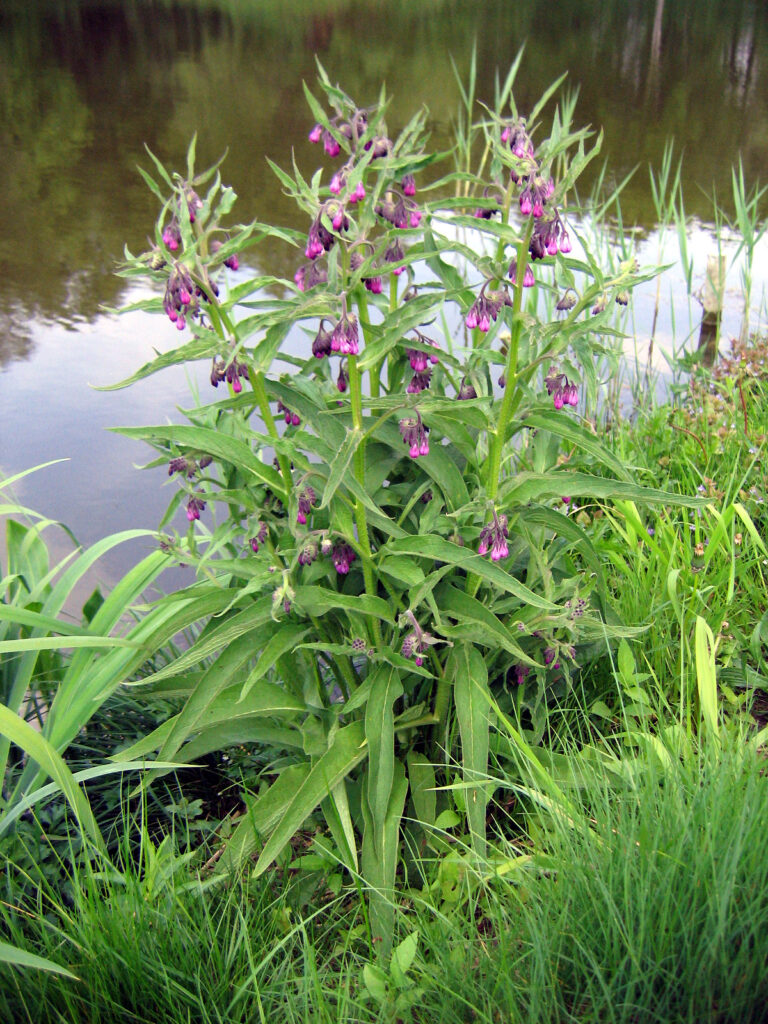
Wikimedia Commons / CC BY-SA
Parts Used
RootLeaf
Therapeutic Uses
Bone fractures (topical — accelerates healing, RCT evidence), muscle sprains, bruising, joint pain, wound healing (topical). Allantoin stimulates cell proliferation — exceptional topical healer.
Herbal Actions
Vulnerary (wound healing), anti-inflammatory, demulcent, astringent, cell proliferant (allantoin)
Active Constituents
Allantoin (0.6–4.7% — primary wound-healing compound), pyrrolizidine alkaloids (symphytine, echimidine — toxic, especially in root), mucilage, tannins, rosmarinic acid
Preparation Methods
🧴 Salve/Balm🌿 Poultice🏺 Tincture
Traditional Preparation Notes
| Herbal Tea | INTERNAL USE NOT RECOMMENDED — pyrrolizidine alkaloids |
| Tincture | TOPICAL ONLY: diluted tincture for compress, or commercial preparations |
| Notes | TOPICAL USE ONLY — internal use banned in many countries due to PA hepatotoxicity. Cream or ointment (Kytta, Traumaplant) clinically validated for fractures and sprains. Do not apply to broken skin. Do not use internally. |
Safety Information
Safety Rating
⚠ Use with Caution
Pregnancy
Avoid in Pregnancy
Drug Interactions
None known
Contraindications: INTERNAL USE CONTRAINDICATED — pyrrolizidine alkaloids cause hepatic veno-occlusive disease. Topical use only. Do not use on broken skin. Avoid during pregnancy (topical absorbed).
Side Effects: Internal: severe hepatotoxicity, veno-occlusive disease. Topical: generally safe, rare contact dermatitis. Allantoin beneficial topically.