
Asteraceae
Coltsfoot
Tussilago farfara
⚠ Use with Caution
Avoid in Pregnancy
Native to: Europe, Asia
Also known as: Coughwort, Foalfoot, Horse Hoof, Bull's Foot
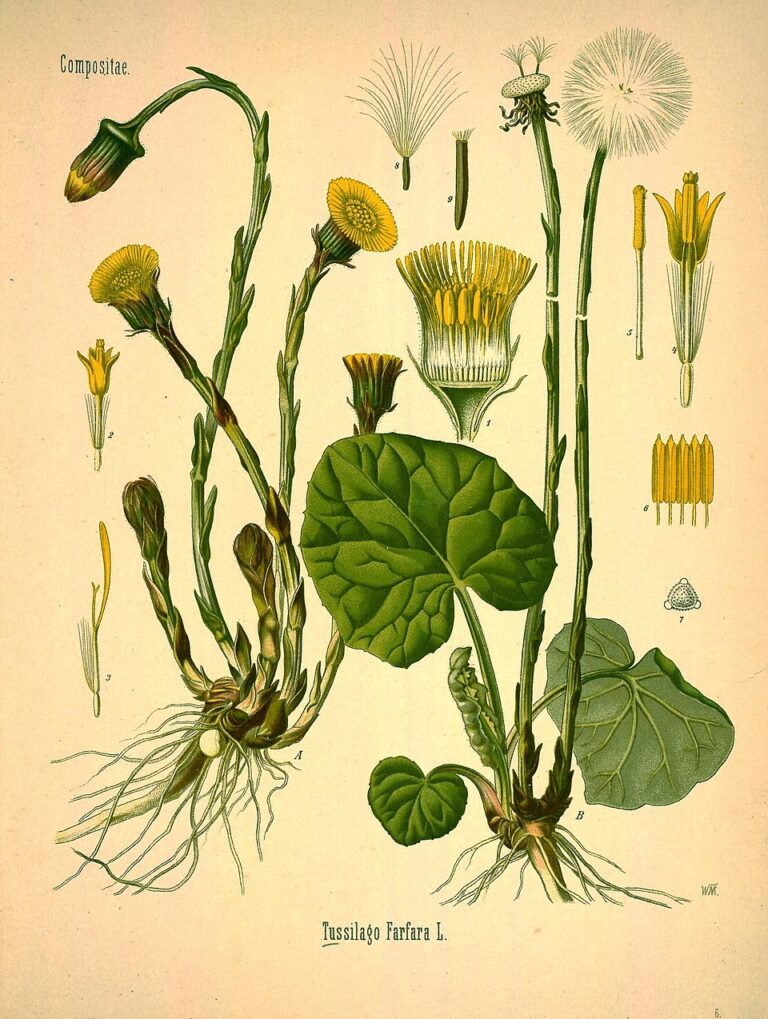
Wikimedia Commons / CC BY-SA
Parts Used
LeafFlower
Therapeutic Uses
Dry cough, bronchitis, laryngitis, asthma, pharyngitis. One of the oldest recorded European cough herbs — the botanical name means 'cough dispeller'. PA content limits modern use.
Herbal Actions
Expectorant, demulcent, antispasmodic, anti-inflammatory (respiratory)
Active Constituents
Mucilage (polysaccharides), flavonoids (rutin, quercetin), tannins, carotenoids, pyrrolizidine alkaloids (senkirkine, senecionine — present in small amounts, especially in flowers)
Preparation Methods
☕ Herbal Tea🏺 Tincture🍯 Syrup
Traditional Preparation Notes
| Herbal Tea | 2 tsp dried leaf per 250ml, steep 10 min, 3x daily — leaf has lower PA than flower |
| Tincture | 2–3 ml (1:5, 25% ethanol), 3x daily — short courses only |
| Notes | Use leaf only (lower PA content than flower). Maximum 4–6 weeks per year. PA-free standardized extracts available and preferred. German authorities restrict PA content. Consider mullein as safer alternative for chronic coughs. |
Safety Information
Safety Rating
⚠ Use with Caution
Pregnancy
Avoid in Pregnancy
Drug Interactions
None known
Contraindications: Avoid in pregnancy, children, liver disease. Pyrrolizidine alkaloids — hepatotoxic with prolonged use. Avoid flowers (higher PA). Use leaf only and short term.
Side Effects: Liver toxicity with long-term use (PA content). Allergic reactions (Asteraceae). Short-term leaf use relatively safe.