Caryophyllaceae
Chickweed
Stellaria media
✓ Generally Safe
Safe in Pregnancy
Native to: Europe (naturalized globally)
Also known as: Common Chickweed, Starweed, Mouse-ear, Satin Flower
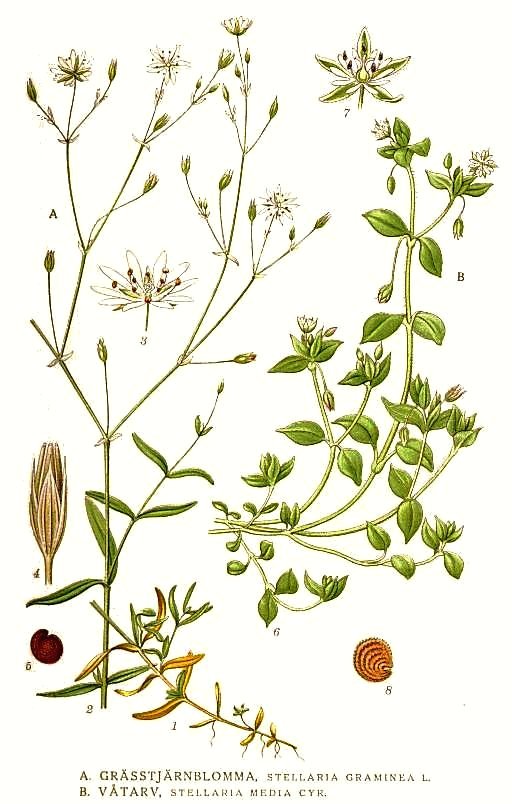
Wikimedia Commons / CC BY-SA
Parts Used
LeafStemFlower
Therapeutic Uses
Skin conditions (eczema, psoriasis, itching, dry skin — topical), urinary inflammation, coughs (demulcent), nutritional deficiency. Primarily a topical herb. Fresh plant applied as poultice for inflamed skin.
Herbal Actions
Demulcent, emollient, anti-inflammatory, mild diuretic, nutritive, vulnerary
Active Constituents
Saponins, coumarins, flavonoids (rutin, quercetin), carboxylic acids, vitamins C and B group, minerals (iron, calcium, magnesium)
Preparation Methods
🧴 Salve/Balm☕ Herbal Tea🌿 Poultice
Traditional Preparation Notes
| Herbal Tea | Handful fresh plant per 500ml, steep 10 min, 3x daily (mild, pleasant) |
| Tincture | 3–5 ml (1:3, 25% ethanol, fresh plant), 3x daily |
| Notes | Fresh plant poultice most effective for skin — apply directly to affected area. Infused oil (fresh plant in olive oil) excellent base for eczema creams. Available year-round in mild climates — free wild food and medicine. |
Safety Information
Safety Rating
✓ Generally Safe
Pregnancy
Safe in Pregnancy
Drug Interactions
None known
Contraindications: Very few — one of safest herbs. Nitrate accumulation in large quantities (like spinach). No significant interactions.
Side Effects: Nitrate toxicity with very large internal quantities. Otherwise extremely safe.