Juglandaceae
Black Walnut
Juglans nigra
⚠ Use with Caution
Avoid in Pregnancy
Native to: Eastern North America
Also known as: American Black Walnut, Eastern Black Walnut
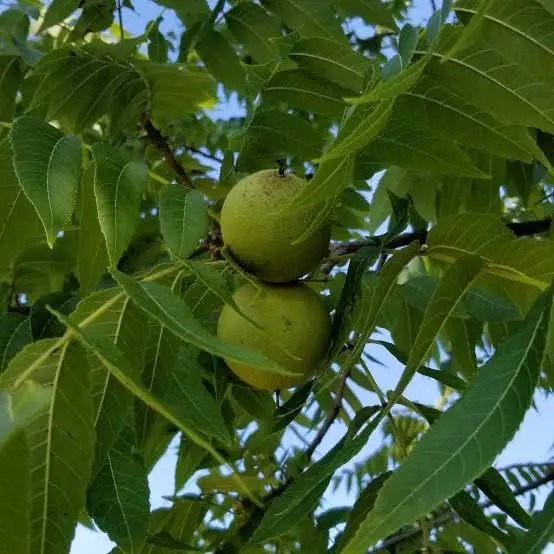
Wikimedia Commons / CC BY-SA
Parts Used
HullLeaf
Therapeutic Uses
Intestinal parasites (roundworm, tapeworm, Candida, Giardia), fungal infections (skin — topical), eczema, psoriasis, hyperthyroidism (adjunct — juglone reduces thyroid activity).
Herbal Actions
Antifungal, anthelmintic (antiparasitic), astringent, laxative, alterative
Active Constituents
Juglone (1,4-naphthoquinone — primary active), tannins (gallotannins, ellagitannins), flavonoids, volatile oils
Preparation Methods
🏺 Tincture💊 Capsule
Traditional Preparation Notes
| Herbal Tea | Not recommended — juglone bitter and poorly extracted |
| Tincture | 2–4 ml green hull tincture (1:5, 60% ethanol), 2–3x daily for parasite protocols |
| Notes | Green hull (unripe) tincture is most potent. Part of traditional antiparasitic protocol (with wormwood and clove). Topical application for ringworm, athlete's foot. Stains skin/clothing dark brown. |
Safety Information
Safety Rating
⚠ Use with Caution
Pregnancy
Avoid in Pregnancy
Drug Interactions
Possible — consult doctor
Contraindications: Avoid in pregnancy. Avoid with lithium (diuretic interaction). Do not apply topically to sensitive or broken skin (juglone irritant).
Side Effects: GI upset. Dark staining of skin and urine. Juglone: cytotoxic at high doses. Allergic reactions possible (nut allergy cross-react).