Ericaceae
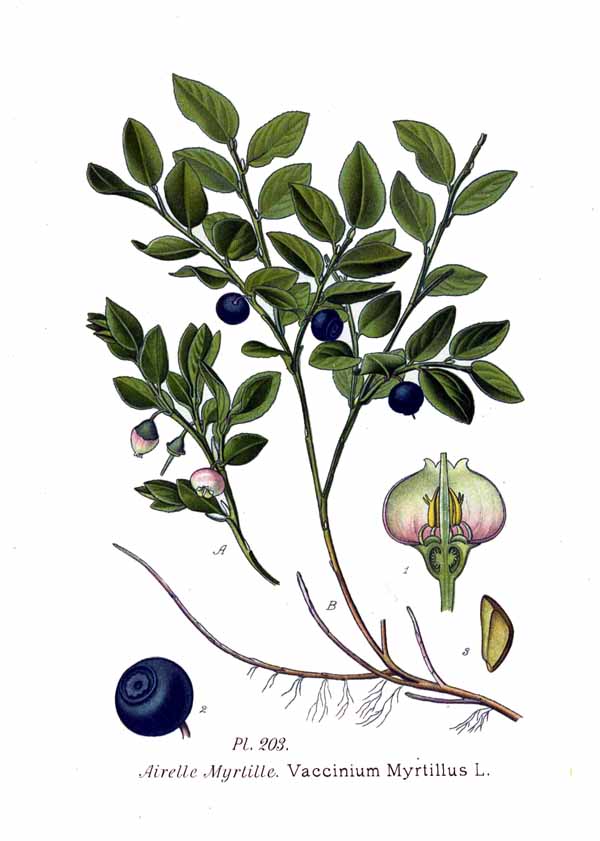
Bilberry
Vaccinium myrtillus
✓ Generally Safe
Consult Doctor
Native to: Northern and Central Europe
Also known as: European Blueberry, Whortleberry, Huckleberry, Whinberry
Wikimedia Commons / CC BY-SA
Parts Used
BerryLeaf
Therapeutic Uses
Diabetic retinopathy (clinical evidence), macular degeneration, poor night vision, varicose veins, chronic venous insufficiency, diarrhea (astringent — berries), blood sugar regulation (leaf). RAF pilots used bilberry jam in WWII for night vision.
Herbal Actions
Antioxidant, anti-inflammatory, vasotonic, ophthalmological, antidiabetic (leaf), astringent
Active Constituents
Anthocyanins (myrtillin, delphinidin — 0.5% in berries), flavonoids, tannins, catechins, organic acids, chromium (leaf)
Preparation Methods
💊 Capsule🏺 Tincture☕ Herbal Tea
Traditional Preparation Notes
| Herbal Tea | Leaf: 1 tsp dried per 250ml, steep 10 min, 3x daily |
| Tincture | 3–5 ml (1:5, 25% ethanol), 3x daily |
| Notes | Standardized extract (25% anthocyanins): 160–480mg daily for vascular conditions. Berry as food best for antioxidant effect. Leaf has different properties (antidiabetic) — distinguish between berry and leaf preparations. |
Safety Information
Safety Rating
✓ Generally Safe
Pregnancy
Consult Doctor
Drug Interactions
Possible — consult doctor
Contraindications: Leaf: avoid in pregnancy, diabetes medication (hypoglycemic synergy). Berry: generally safe. Caution with anticoagulants.
Side Effects: Mild GI effects. Dark stools (anthocyanins — harmless). Leaf: long-term use may cause toxicity — short courses only.