Hamamelidaceae
Witch Hazel
Hamamelis virginiana
✓ Generally Safe
Caution in Pregnancy
Native to: Eastern North America
Also known as: American Witch Hazel, Winterbloom, Snapping Hazel
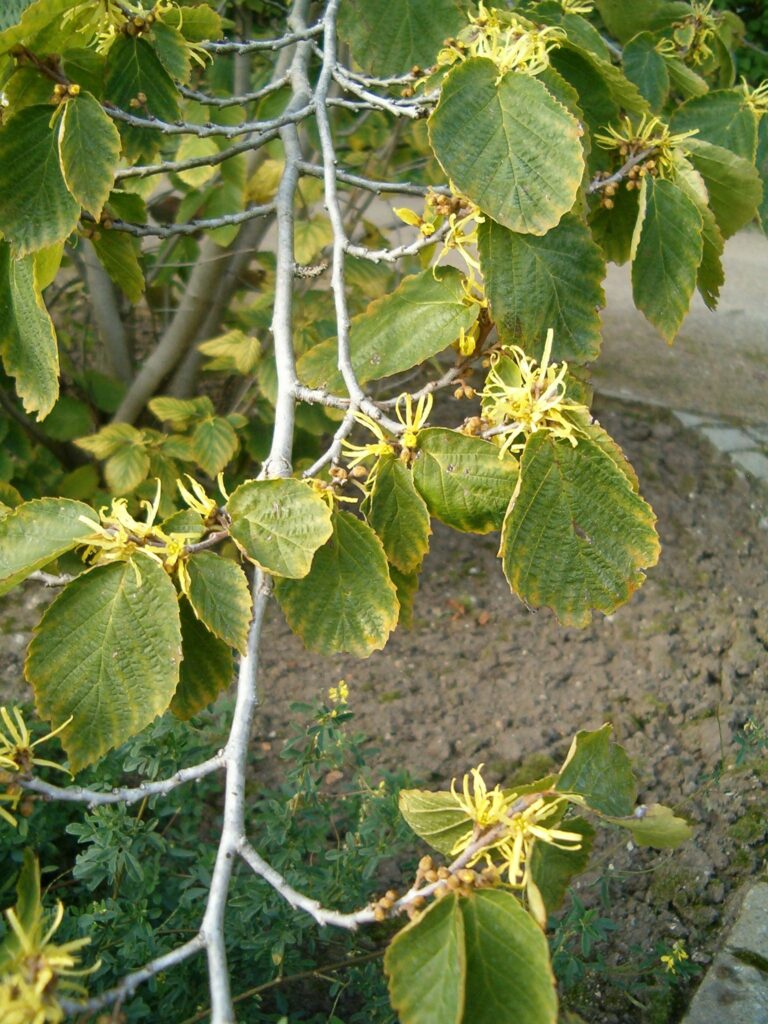
Wikimedia Commons / CC BY-SA
Parts Used
BarkLeaf
Therapeutic Uses
Hemorrhoids (topical and internal — clinical evidence), varicose veins, skin inflammation, eczema, acne, minor wounds and cuts, bruising, insect bites, sunburn, mucous membrane inflammation.
Herbal Actions
Astringent, anti-inflammatory, hemostatic, vulnerary, antioxidant, antiviral
Active Constituents
Tannins (hamamelitannin, catechins — 3–10%), gallic acid, proanthocyanidins, flavonoids (quercetin, kaempferol), volatile oil (eugenol, hexenol), saponins
Preparation Methods
🏺 Tincture☕ Herbal Tea🧴 Salve/Balm
Traditional Preparation Notes
| Herbal Tea | 1 tsp dried bark/leaf per 250ml, steep 15 min, 3x daily (internal use) |
| Tincture | 2–4 ml (1:5, 45% ethanol), 3x daily for internal conditions |
| Notes | Commercial witch hazel water (14% ethanol distillate) for topical use — apply 2–3x daily. Internal: bark decoction or tincture for hemorrhoids. Suppositories for hemorrhoids highly effective. |
Safety Information
Safety Rating
✓ Generally Safe
Pregnancy
Caution in Pregnancy
Drug Interactions
None known
Contraindications: Internal use in pregnancy — use cautiously. Tannins may reduce absorption of iron and other minerals. Avoid prolonged internal use.
Side Effects: Internal: GI upset from tannins (take with food). Topical: drying effect with overuse. Commercial products contain alcohol — stings on broken skin.