Berberidaceae
Oregon Grape
Mahonia aquifolium
⚠ Use with Caution
Avoid in Pregnancy
Native to: Western North America
Also known as: Holly-leaved Barberry, Mountain Grape, Trailing Mahonia
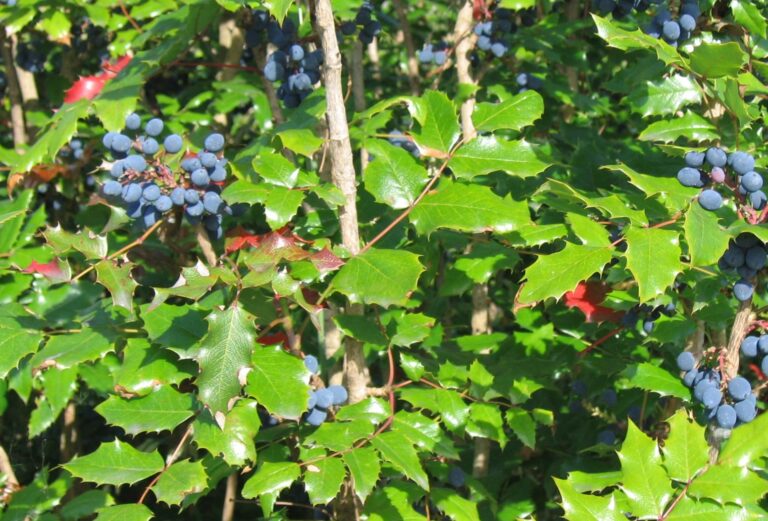
Wikimedia Commons / CC BY-SA
Parts Used
RootBark
Therapeutic Uses
Psoriasis (topical and internal — clinical trials with mahonia extract), eczema, skin infections, liver and gallbladder sluggishness, GI infections, SIBO, candidiasis, UTIs.
Herbal Actions
Antimicrobial, antifungal, bitter tonic, cholagogue, hepatoprotective, anti-inflammatory, immunostimulant
Active Constituents
Isoquinoline alkaloids: berberine (as in goldenseal but lower concentration), berbamine, oxyacanthine, columbamine, hydrastine
Preparation Methods
🏺 Tincture🍵 Decoction💊 Capsule
Traditional Preparation Notes
| Herbal Tea | 1 tsp dried root per 250ml, simmer 15 min, 2–3x daily — very bitter |
| Tincture | 2–4 ml (1:5, 60% ethanol), 3x daily |
| Notes | Topical cream (10% mahonia extract) clinically proven for psoriasis — apply 2x daily. Internal: more sustainable alternative to endangered goldenseal for berberine therapy. |
Safety Information
Safety Rating
⚠ Use with Caution
Pregnancy
Avoid in Pregnancy
Drug Interactions
Possible — consult doctor
Contraindications: Avoid in pregnancy (berberine — teratogenic potential, uterotonic). Caution with CYP3A4 substrates. Avoid in severe liver disease.
Side Effects: GI upset, nausea. Bright yellow staining. Photosensitivity with prolonged use. Generally safer than goldenseal.