
Gentianaceae
Gentian
Gentiana lutea
✓ Generally Safe
Caution in Pregnancy
Native to: Central and Southern European mountains
Also known as: Yellow Gentian, Bitter Root, Bitterwort
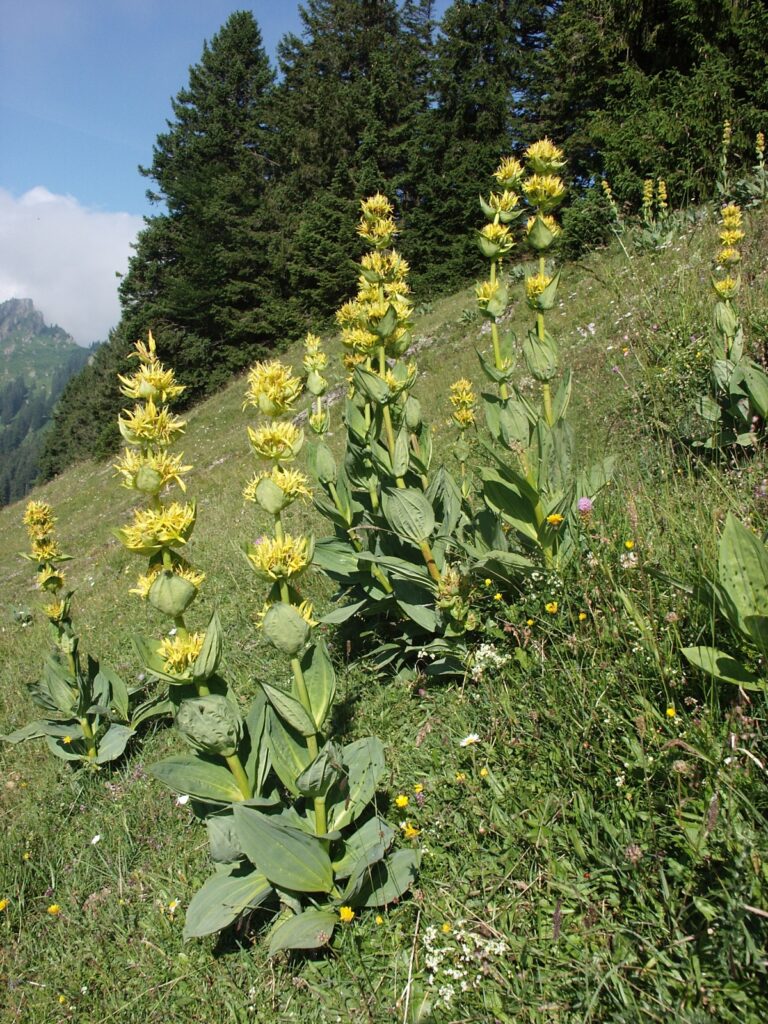
Wikimedia Commons / CC BY-SA
Parts Used
Root
Therapeutic Uses
Loss of appetite, dyspepsia, bloating, inadequate digestive enzyme production, liver and gallbladder sluggishness, anemia (improves iron absorption), anorexia recovery. The classic bitter digestive herb.
Herbal Actions
Bitter tonic, digestive stimulant, cholagogue, carminative, hepatoprotective, anti-inflammatory, antimicrobial
Active Constituents
Iridoid bitter glycosides (amarogentin — one of the bitterest natural compounds, gentiopicroside, swertiamarin), xanthones, alkaloids (gentianine), flavonoids
Preparation Methods
🏺 Tincture☕ Herbal Tea💊 Capsule
Traditional Preparation Notes
| Herbal Tea | 0.5 tsp dried root per 250ml, steep 5 min, drink 30 min before meals |
| Tincture | 1–3 ml (1:5, 40% ethanol), 15–30 min before meals |
| Notes | Must taste bitter to work — triggers cephalic phase digestive response via bitter taste receptors. Even a few drops on tongue effective. Do not take with antacids. |
Safety Information
Safety Rating
✓ Generally Safe
Pregnancy
Caution in Pregnancy
Drug Interactions
None known
Contraindications: Avoid in peptic ulcer, gastritis, hyperacidity (stimulates acid production). Avoid in pregnancy (emmenagogue at high doses). Avoid in hypertension at very high doses.
Side Effects: Headache at very high doses. GI stimulation (nausea, diarrhea at excess doses). Generally well tolerated at therapeutic doses.